Stop the water first, sort the claim next
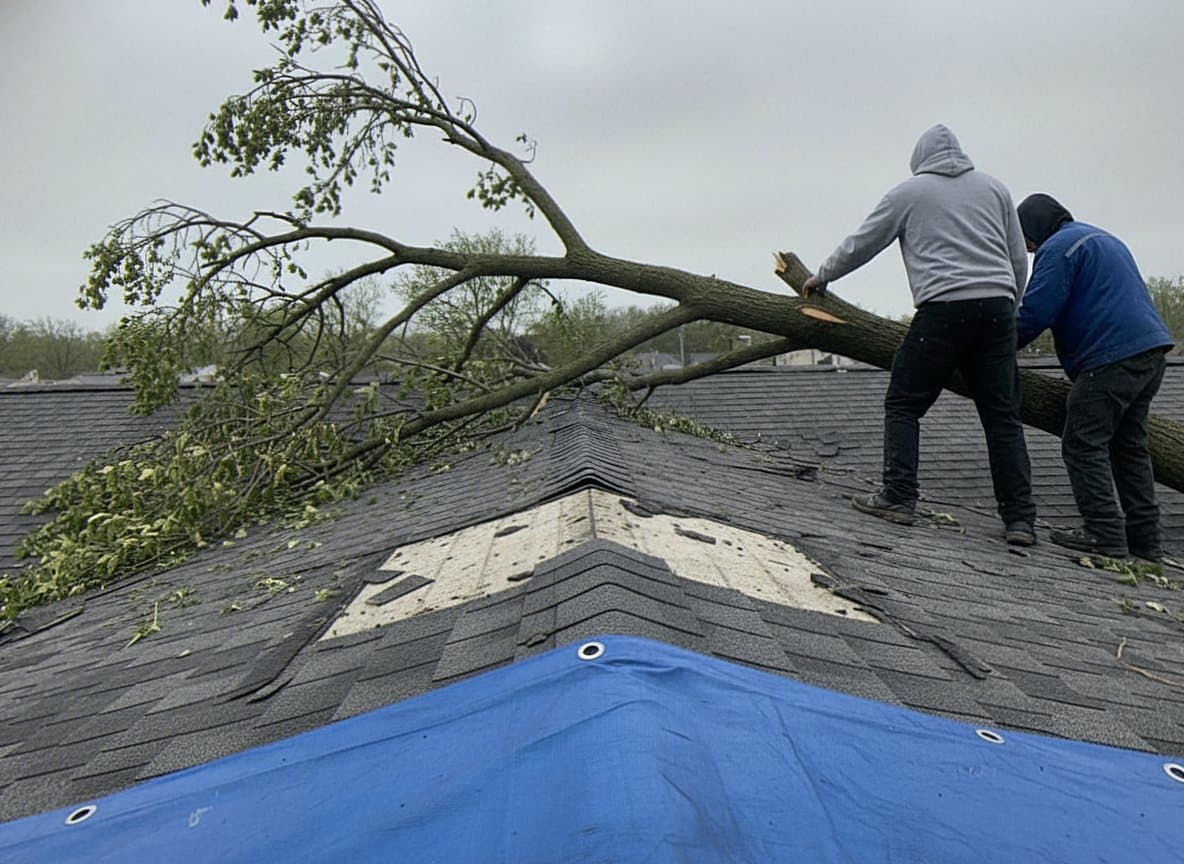
A storm does not wait for business hours. Hail dents the shingles, wind lifts the tabs, and a heavy snow load strains the whole roof at once. The first sign is often water in the attic or a wet ring on the ceiling. Left open, a torn roof lets the next rain soak the deck and the insulation below. The first job is not a clean repair but a way to stop more water from getting in.
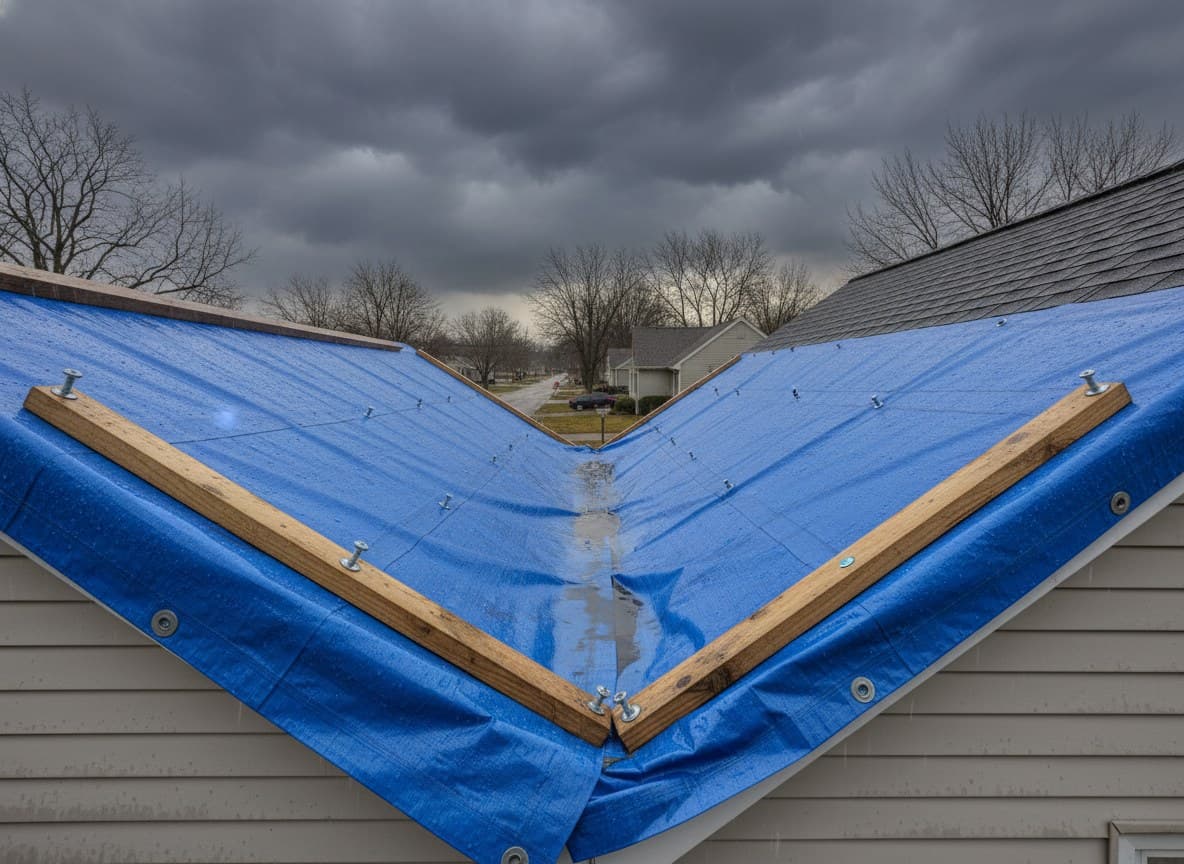
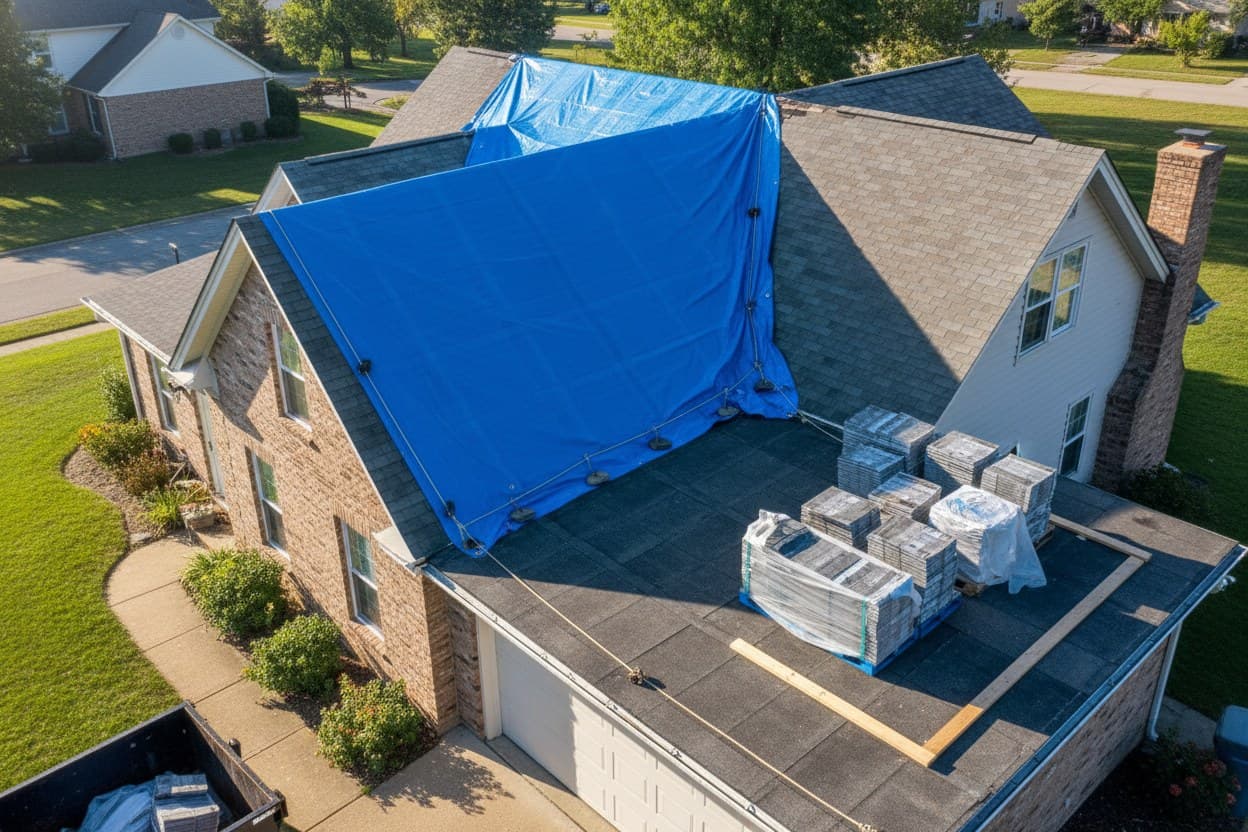
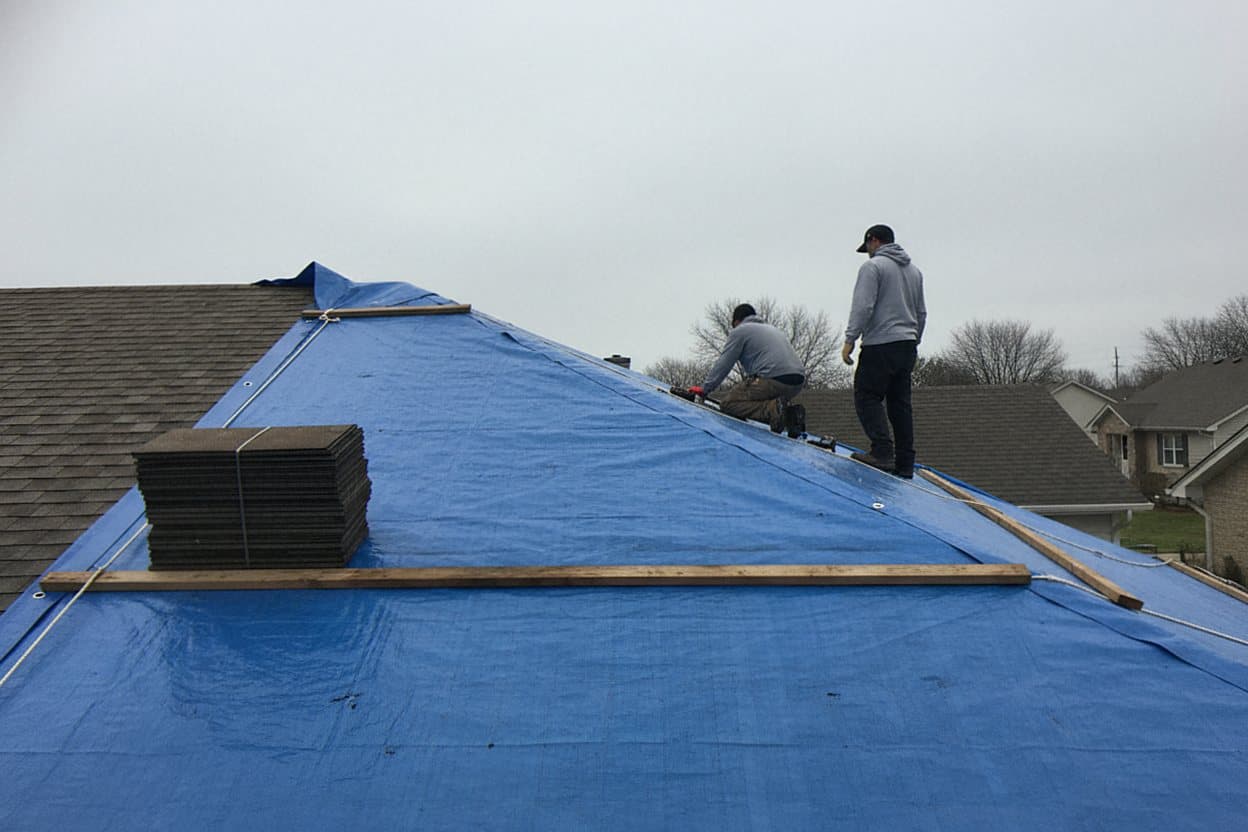
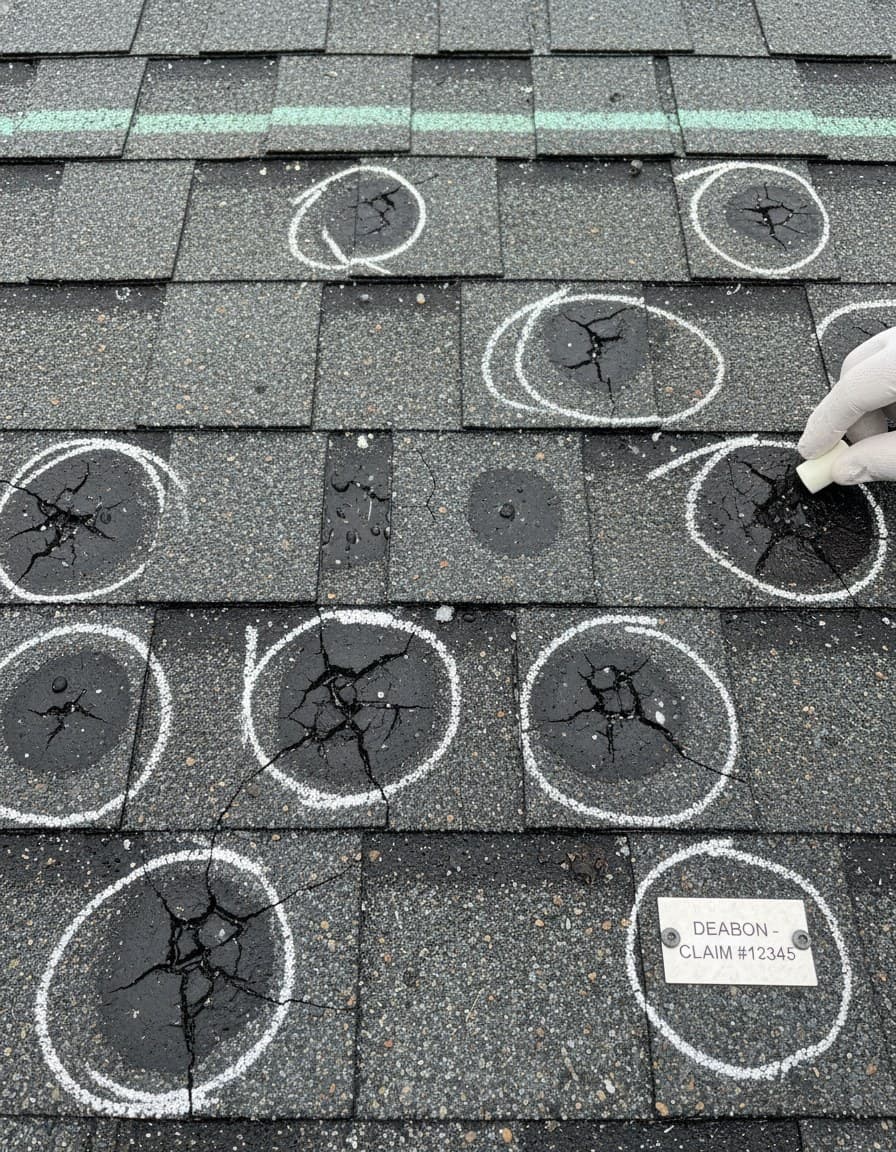
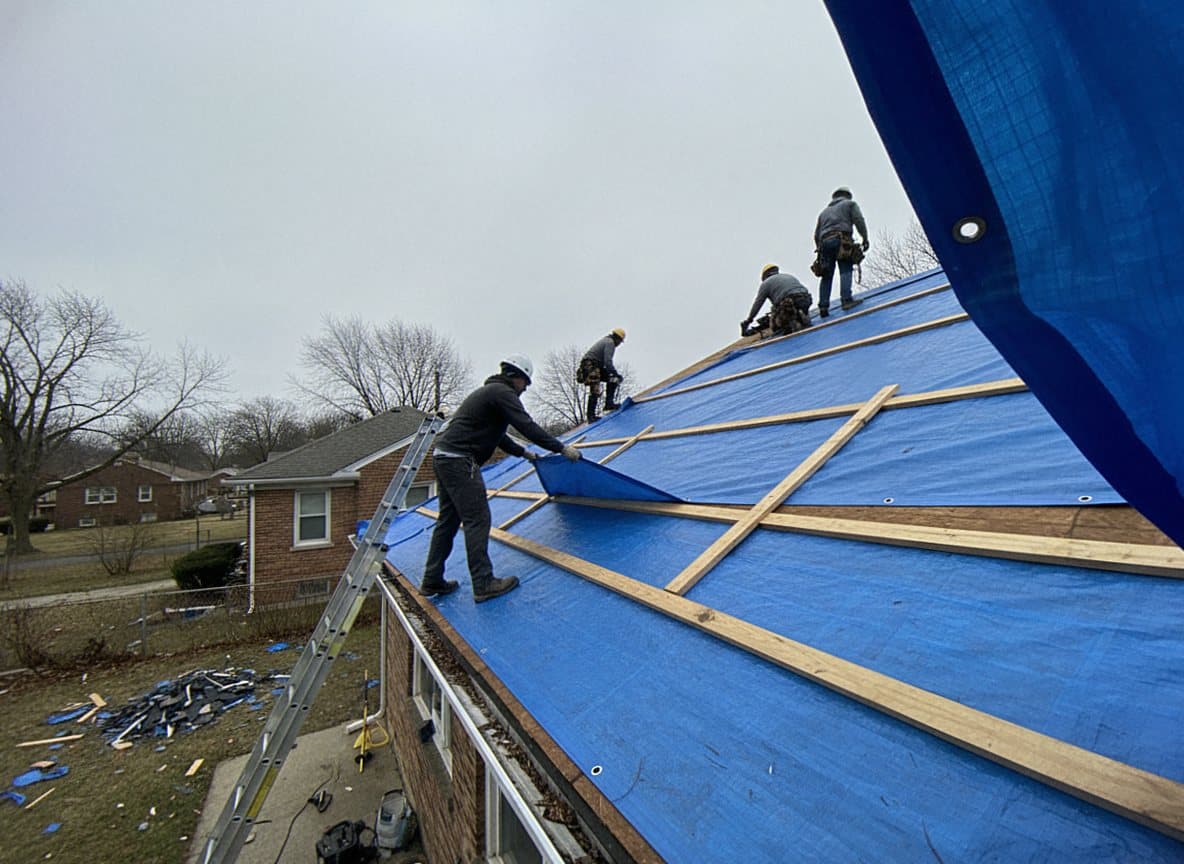
Storm work runs in two stages. First a crew makes the roof safe, often with a heavy tarp strapped over the open area so it sheds water through the next storm. Then they walk the whole roof and write down every dent, crease, and missing shingle with photos. That record is what an insurance adjuster needs to see. Only after the claim is settled does the real repair or a full roof replacement begin.
- An emergency tarp keeps water out until the weather clears.
- Every dent and crease gets photographed for the insurance file.
- Hail and wind damage gets read by someone who knows roofs.
- A clear damage report gives the adjuster less room to lowball.
- Once the claim clears, the same crew can do the full repair.
Dearborn sits in a stretch of Wayne County that catches hard summer storms and heavy snow off the lakes. A local roofer can be on the roof the same day, before the next front rolls in. They know how Michigan ice dams tear at the eaves and where wind finds the weak shingle first. They also know which damage an adjuster will pay for and which they will argue over. We route your call to a storm crew that covers Dearborn and the nearby Wayne County towns.
If a storm just rolled through, do not wait for the ceiling to stain. Call now and a local roofer will tarp the damage, document it for the claim, and price the fix. The inspection is free.