Dearborn Roof ReplacementTear-Off & Re-Roof Specialists
Commercial Roofing · Dearborn

Commercial Roofing in Dearborn, MI for Flat and Low Slope Buildings

Flat roof replacement and repair for Dearborn storefronts, offices, and multi unit buildings, with little downtime.

Tell us about your project.

We'll be back to you the same business day.

No spam. We'll text you to confirm.

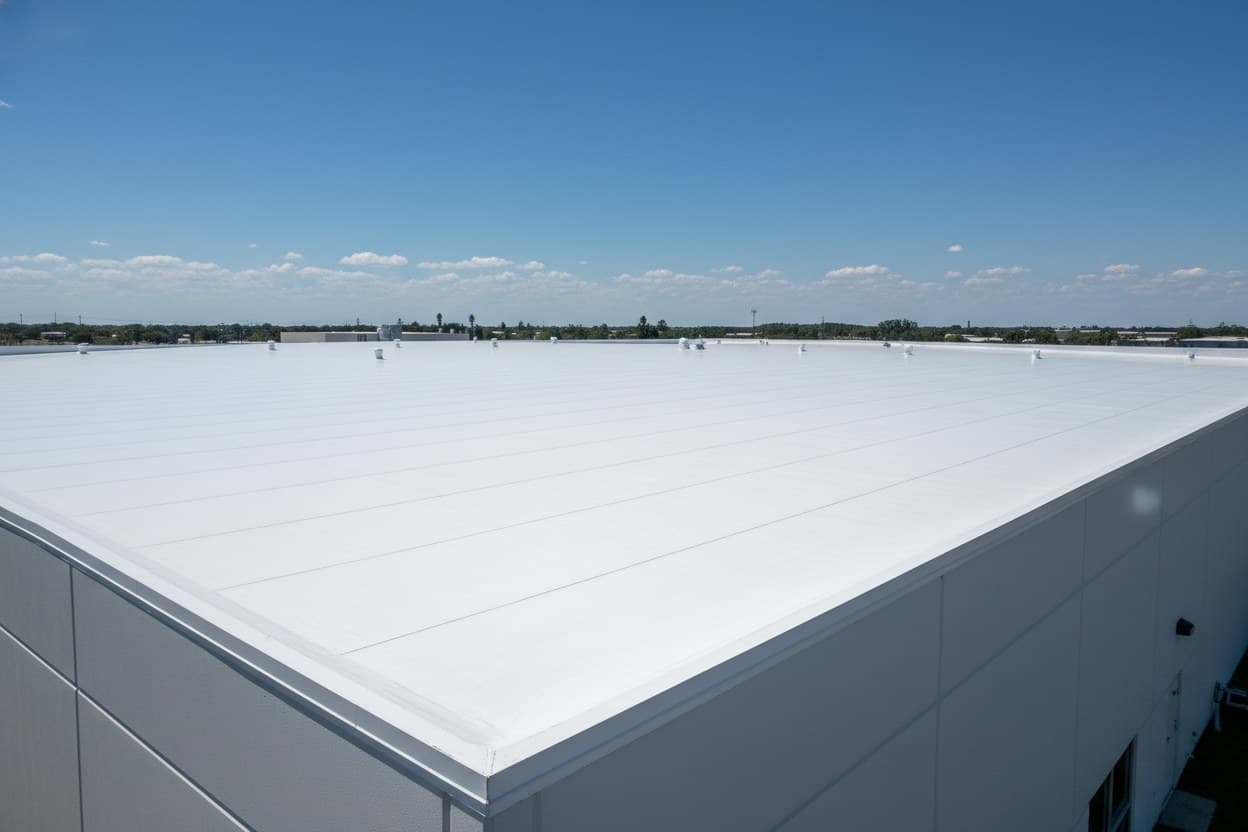
New white TPO roof on a Dearborn storefront
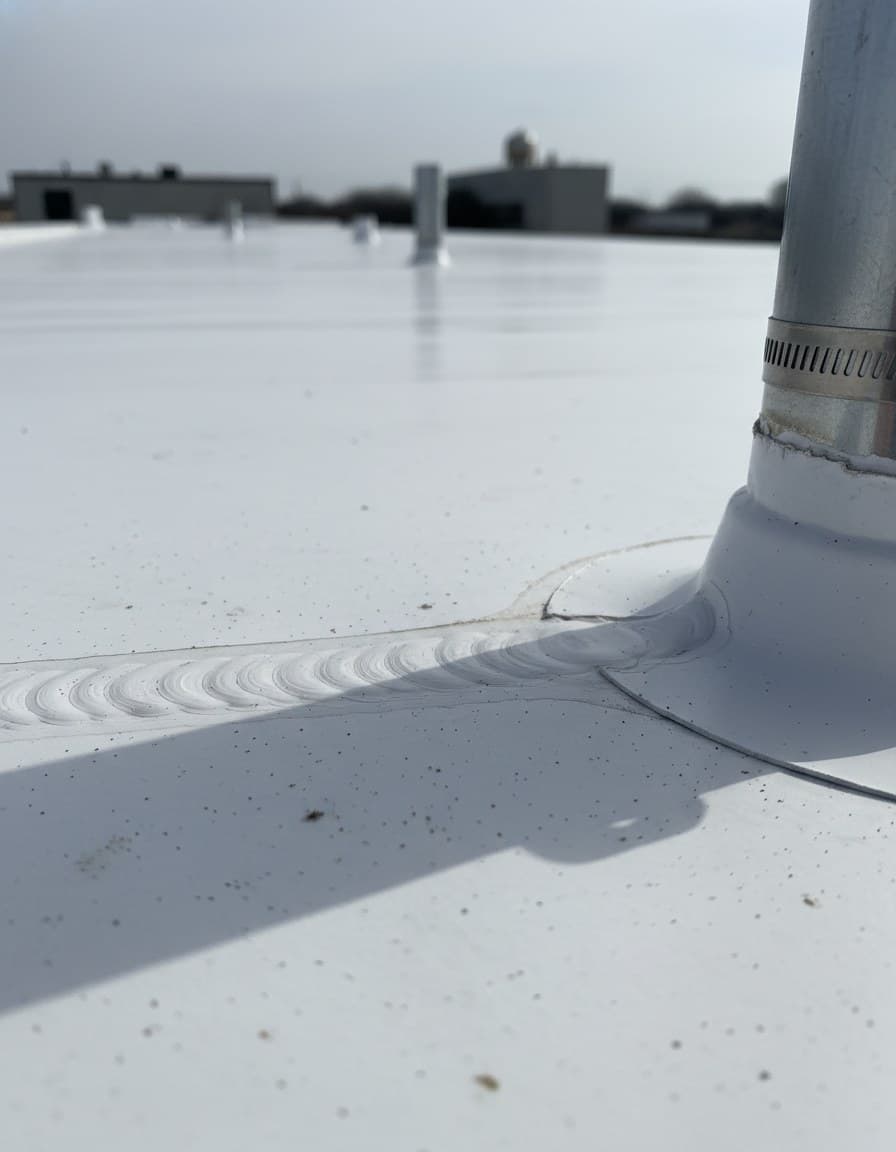
Welded TPO seam and pipe-boot flashing in Dearborn
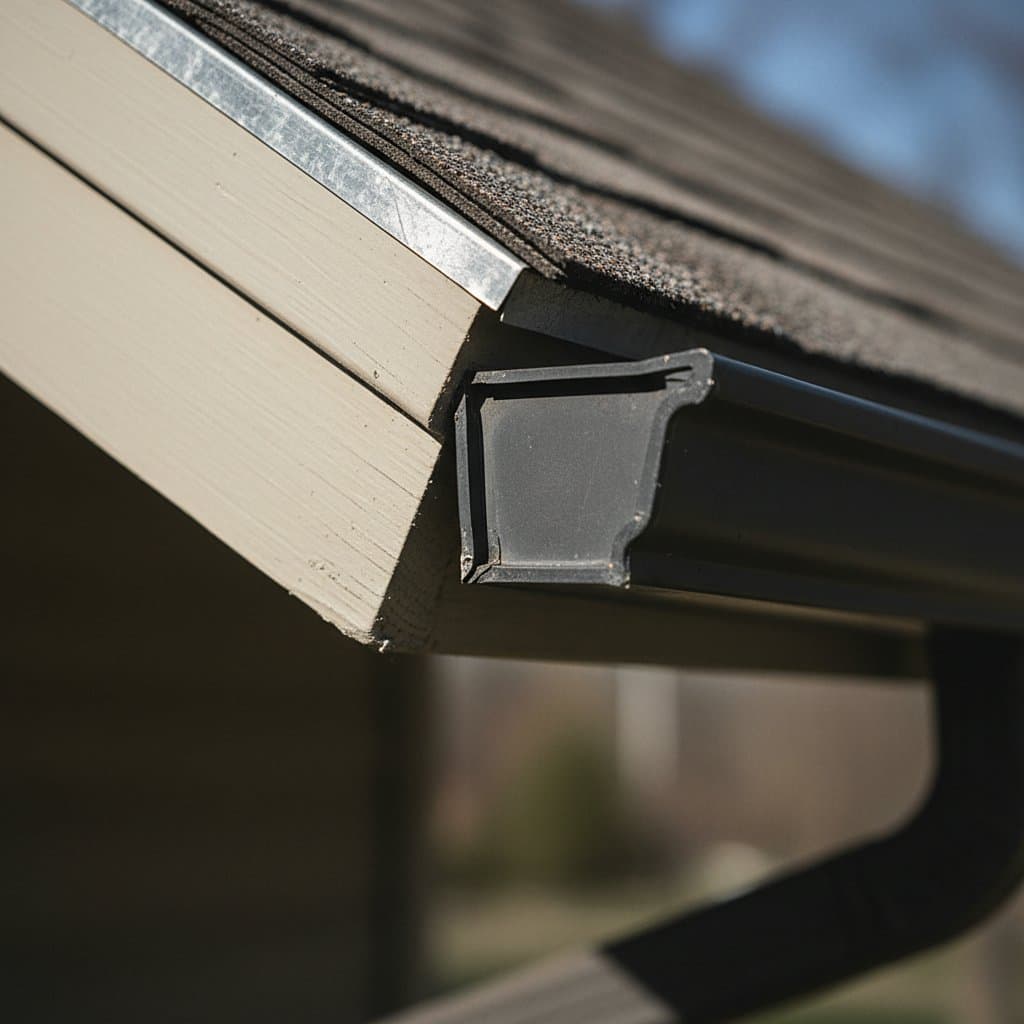
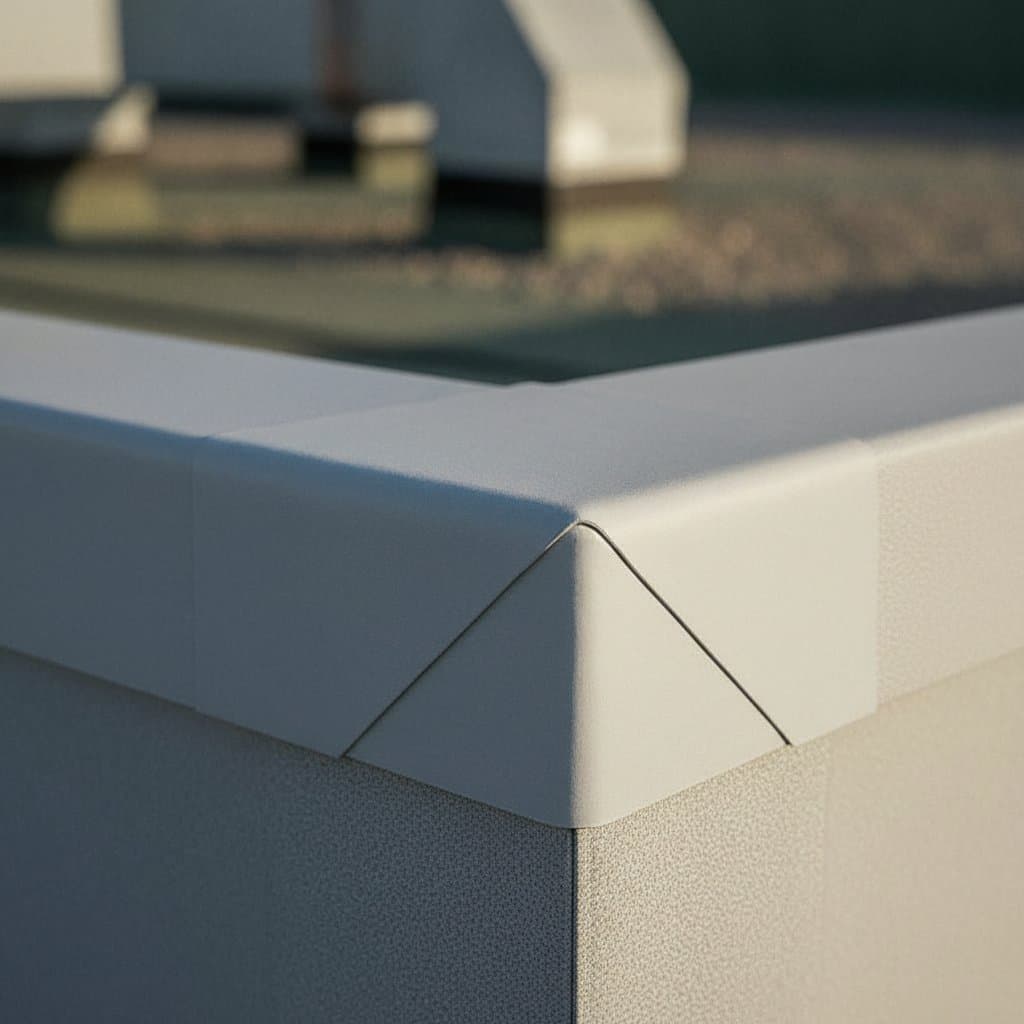
Metal coping along a finished Dearborn commercial parapet
What we install

What a flat commercial roof really needs in Dearborn

A flat roof fails in a way a house roof never does. Water does not run off, it sits. A low spot the size of a dinner plate turns into a pond after every rain. That standing water finds the smallest seam or old patch and works its way down to the insulation. By the time a stain shows on the ceiling tile inside, the deck above is often soaked. A regular roof inspection catches the soft spots while the fix is still cheap.

Most commercial buildings in Dearborn carry one of a few roof systems. The common choice today is a single ply membrane like TPO or EPDM, rolled out in wide sheets and sealed at the seams. Under the membrane sits rigid insulation board, often tapered so water runs toward the drains. Older buildings still wear built up roofs of tar and gravel that have aged past their prime. A real replacement strips the worn layer, checks the deck and drains, lays fresh insulation, and welds a new membrane that sheds water for decades.

  • A welded single ply membrane seals the seams where flat roofs leak first.
  • Tapered insulation moves water toward the drains instead of letting it pond.
  • Reflective TPO bounces summer heat and lowers cooling bills inside.
  • Flashing wraps every vent, drain, and rooftop unit that breaks the surface.
  • Crews work around your hours so the doors stay open during the job.
A flat roof does not leak because the membrane was thin. It leaks because the water had nowhere to go.

A flat roof on a Dearborn storefront takes more abuse than most owners think. Foot traffic from service techs, grease off a kitchen vent, and the freeze and thaw of a Wayne County winter all wear it down. A local commercial roofer knows how snow loads sit on a low slope and where ice backs up at the parapet wall. They pull the right permit, schedule around your business, and keep the lot clear for customers. We route your call to a crew that handles flat and low slope roofs across Dearborn and the rest of Wayne County.

The first step is a free roof inspection and a written scope you can take to your insurer or your books. No deposit and no pressure to sign that day. Call now and we will get a commercial roofer on your roof this week.
Materials

What goes into a flat roof system

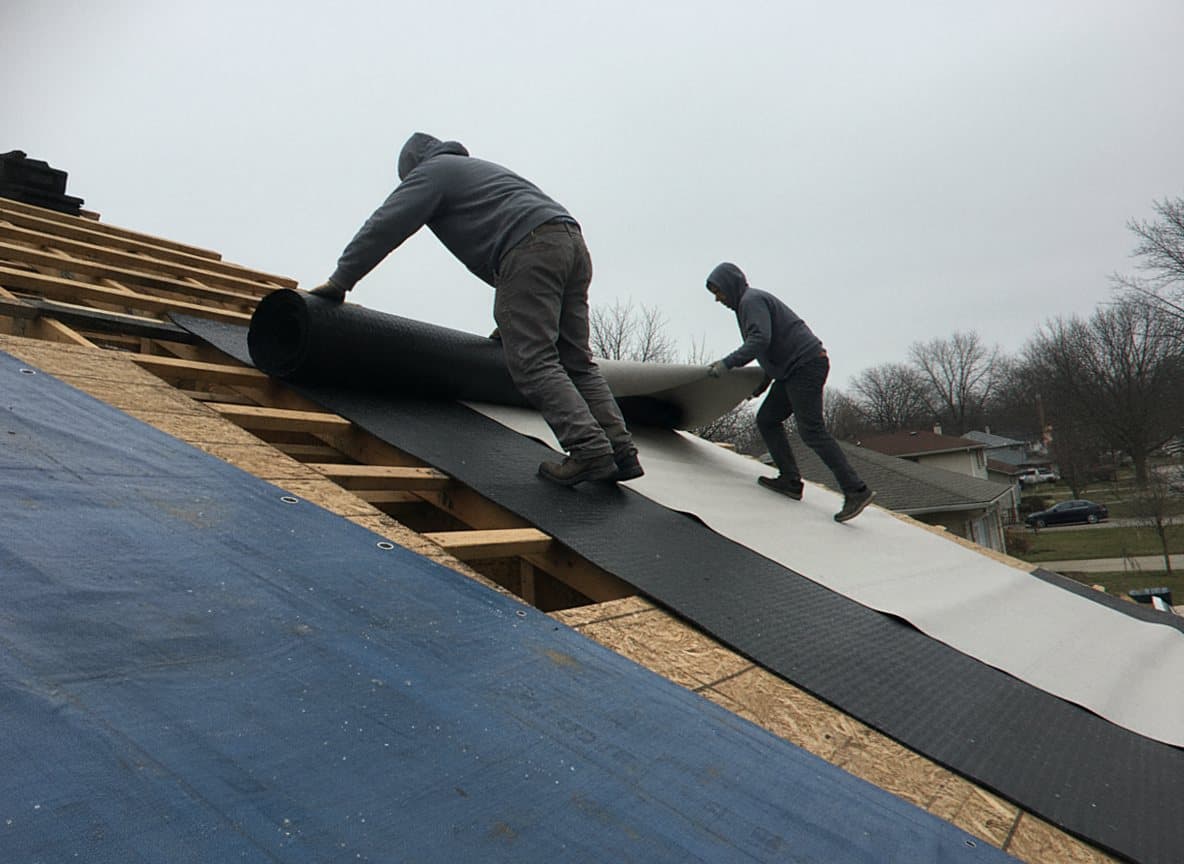
A commercial roof is built in layers, and the membrane you see from the parking lot is only the top one. It starts at the deck, which on most buildings is steel or concrete rather than the plywood used on a house. Over the deck goes rigid insulation board, the layer that holds in heat and gives the roof its slope toward the drains. On many jobs the insulation is tapered, cut at a slight angle so water always moves instead of sitting in a low spot. A cover board over the insulation gives the membrane a firm, even surface to bond to.

The membrane is the waterproof skin that does the real work. TPO is a white single ply sheet welded together with hot air, so the seams melt into one solid piece instead of relying on glue. EPDM is a black rubber sheet that holds up well but soaks in more summer heat. Either one gets fastened to the deck or fully adhered, then sealed at every edge. Metal flashing and pipe boots wrap each drain, vent, and rooftop unit that pokes through the roof. A metal coping cap finishes the parapet wall so wind cannot peel the membrane back. The thickness of the membrane matters too, since a thicker sheet shrugs off hail and dropped tools that would puncture a thin one.

  • Welded TPO seams melt into one sheet, so there is no glue line to fail.
  • Tapered insulation builds in the slope a flat roof needs to drain.
  • White membranes reflect sun and keep the building cooler in summer.
  • Pipe boots and flashing seal every spot where the roof is broken open.
  • Metal coping locks the membrane down at the parapet against wind.
Rooftop HVAC flashing wrapped on a Dearborn roof
Crew laying insulation on a Dearborn commercial roof deck
What about the alternatives?

Which flat roof system fits your building?

Several systems will cover a flat roof, and a salesperson will push the one they install. Here is the honest read on each option for a Dearborn building, not the version on the brochure.

TPO single ply membrane

A white welded sheet that reflects heat and seals at the seams. The common pick for most Dearborn stores and offices, and a solid value.

Recommended

EPDM rubber membrane

A proven black rubber roof that lasts, but the dark color pulls in summer heat. A fair choice where the cooling load is not a worry.

Acceptable

Modified bitumen

Asphalt sheets torched or rolled down in layers. It works on small roofs and tight spots, though the seams need more care over time.

Acceptable

Roof coating over the old membrane

A liquid coat can buy a few years on a roof that is still sound underneath. On a wet or blistered roof it just seals the problem in.

Acceptable

Silver coat it yourself

A bucket of patch from the store hides a leak for a season at most. It cracks in the cold and the water comes right back.

Skip
How it goes

From quote to walk-on, fast.

01

Free Inspection

We get on the roof, document the decking, flashing, and shingle condition, and photograph everything for you and your insurer.

02

Written Quote

A line-item scope — tear-off, decking repair, underlayment, shingles, and ventilation — with no surprise add-ons later.

03

Tear-Off & Re-Roof

Old shingles come off, soft plywood gets replaced, ice-and-water shield and synthetic underlayment go down, then new architectural shingles.

04

Final Walkthrough

Magnetic nail sweep, gutter clean-out, and a roof-system warranty handoff before we leave your property.

Before you book

What to confirm before you sign

A few questions tell the careful commercial roofers apart from the rest.

A good crew plans the job around your hours, not theirs. They stage materials so the entry stays clear and the lot keeps spaces open for customers. On a noisy tear off they can work the back half of the roof first or start early before you open. Ask for the day by day plan in writing before the trucks show up.
Standing water is the main reason flat roofs fail, so the fix has to address the slope, not just the surface. A real answer involves tapered insulation or added drains to move water off the roof. If a bid simply lays a new membrane over the same flat spots, the ponding comes back. A good roofer will mark the low areas during the inspection and show you how the new layout sheds water toward the drains. Ask where the low spots are now and how the new roof drains them.
Every vent, drain, and HVAC unit that breaks the surface is a place water can get in. A skilled crew rebuilds the flashing and pipe boots around each one as part of the job. Cheap bids leave the old flashing in place and only swap the open field of the roof. Confirm that the curbs and penetrations are in the written scope.
There is no single right answer, so the reasoning matters more than the brand. A roofer should explain why TPO, EPDM, or another system fits your building, your budget, and your sun exposure. Be wary of a crew that installs only one product and calls it the best for everything. Their honesty here tells you how the rest of the job will go.
A commercial roof can carry a material warranty from the maker and a separate labor warranty from the installer. The two are not the same, and a leak at a bad seam falls under labor. Ask for both in writing and read what voids them. A warranty is only worth as much as the company that has to honor it.
Aftercare

Keeping a flat roof watertight

A new flat roof needs more eyes on it than a sloped one, because problems hide until they leak. The biggest threats in Dearborn are clogged drains and the wear from people walking on the membrane. Both let water sit where it should run off. A look twice a year, plus a check after big storms, catches small punctures and loose seams while they are still cheap to fix.

  • Clear the drains and scuppers of leaves and gravel so water runs off after every rain.
  • Walk the roof each spring and fall and look for blisters, splits, or open seams.
  • Check the flashing around every rooftop unit, vent, and pipe for gaps.
  • Watch for standing water a day after rain and mark any new low spots.
  • Keep service techs on the walk pads so foot traffic does not wear the membrane.
  • After a hailstorm or high wind, scan the membrane for punctures and lifted edges.
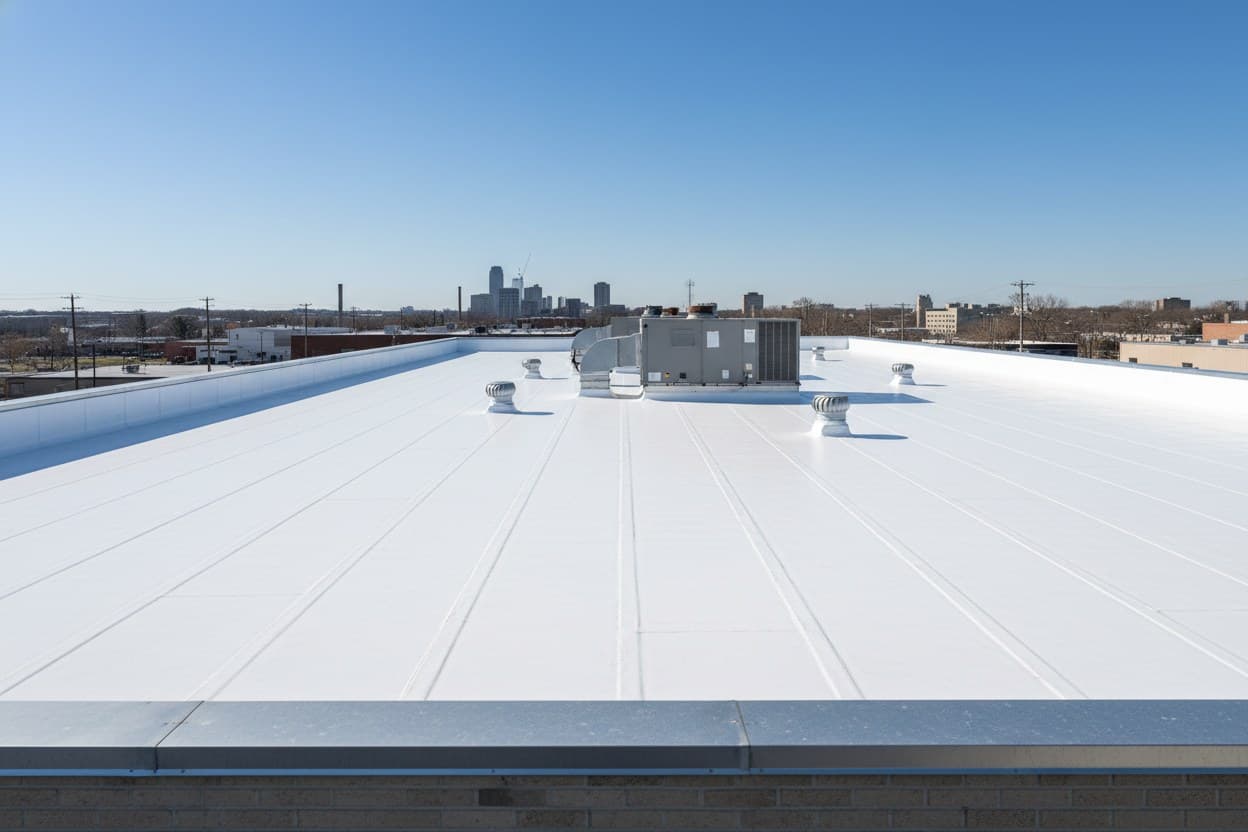
Dearborn commercial building with a new TPO roof
FAQ

Commercial roofing questions from Dearborn owners

A repair fits when damage covers a small area, your roof is under 15 years old, and the deck is sound. A full replacement is the right call when shingles are curling or missing across slopes, the roof is past 20 years, or storm damage has reached the underlayment. The Dearborn roofer we connect you with tells you which fits during the free inspection.
Most Michigan policies cover sudden storm damage from hail, wind, and falling trees. Wear and tear and old age are not covered. The local roofer we route you to documents the damage with photos and a written report so the claim has the proof your adjuster needs.
ACV pays the depreciated value of your roof, which is what it was worth right before the storm. RCV pays the full cost to replace it with new materials. Most newer Michigan policies are RCV, but the second check only comes after the work is done. The contractor handles both the depreciation hold and the recoverable check.
Most Dearborn homes are torn off and re-roofed in one to three days once materials are on site. Larger or complex roofs can run four to five days. The roofer schedules with you and works in dry weather windows so the underlayment is never left open overnight.
Architectural asphalt shingles are the workhorse for Dearborn winters. They are thicker and heavier than the older flat kind, which lets them flex through freeze-thaw and shed snow load without lifting. Standing seam metal is another strong option for steep slopes. The Dearborn roofer the form sends you to walks through the trade-offs in person and matches what is being put up on your block.
When the contractor meets the adjuster on the roof, the damage from the storm gets documented in writing, with photos, and walked through line by line. Homeowners who have a roofer present at that meeting tend to see a fuller scope written into the claim than homeowners who handle the meeting alone. The roofer the form connects you with handles their side of that conversation directly.
The roofer the form sends climbs the roof, checks the attic for daylight or moisture, and writes up a report with photos. The report stays with the homeowner, whether or not the next step is a quote or a claim. The inspection itself does not have a fee tied to it and does not require a commitment to the contractor afterward.
Ready when you are

Get a fixed-price quote on your Dearborn roof replacement Dearborn this week.

Free on-site walk-through. Written estimate before a single bag is opened.

Call (313) 555-0100Get My Free Quote
Call NowFree Quote